

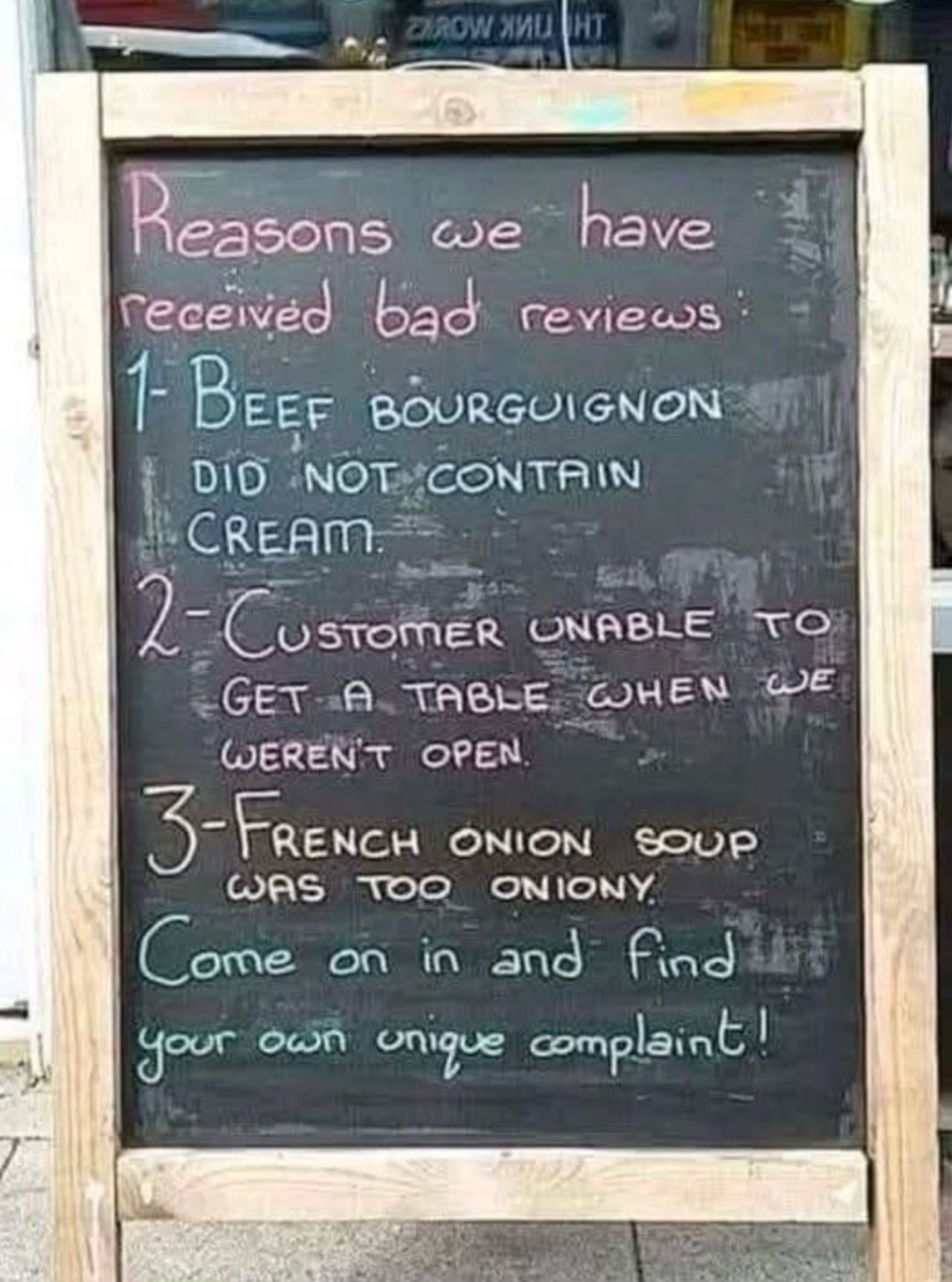
No matter how wonderful your product or service, and regardless of how much you go out of your way to please every customer, invariably someone will still find fault.
And the reason is a simple one. Because people have expectations as to how things should be. And when things don’t align with these expectations, customers can be impressed or disappointed. Regretfully for most businesses, disappointment will often be the default emotion.
There are several reasons for this, but I want to focus on two specifically because you as a business owner have the ability to deal with them.
Your offering is being compared to something else
People’s expectations are based on multiple factors such as previous experiences, things they have heard from others, or opinions based on nothing specific. The challenge for a business is that these expectations are usually biased, leading to unfair beliefs.
Let’s assume you sell insurance and are meeting some potential clients for the first time. What beliefs might they have?
Insurance companies keep raising their rates.
Insurance is a scam because when their friend’s house flooded the company wouldn’t pay.
Insurance is just an expense with no return.
To be able to have a productive conversation about your services, you need to “reset” these biases. This can be done by asking questions, then explaining how these situations may not be relevant to your offerings.
Back to our example, by asking questions the following is discovered.
Their current rates keep going up because they regularly purchase higher end vehicles.
Their friend’s house flooded because someone over filled the bathtub, which is not covered.
They could have had a policy that provides a financial return after a period of time.
Disappointment is the default emotion
People evaluate experiences against what they anticipate receiving. When there is a difference, they immediately perceive it as a loss, leading to disappointment. This is called a Negative Contrast Effect, a cognitive bias where an outcome is perceived as worse because there is a mismatch between a preceding reference point and what was delivered.
For example, imagine a business event where lunch is served. In previous events there’s always been gourmet sandwiches, which you love. This time there is a variety of food stations serving custom dishes made fresh. Even though you end up enjoying this more, the initial emotion is disappointment simply because you were looking forward to the sandwiches.
Disappointment is immediate. Appreciation takes time. This is why “educating” others before the experience takes place is important. This often takes the form of marketing. Effective marketing paints a picture of what the experience will look like before it happens. This allows people to create a new reference point for expectations.
Back to our example of the event lunch, if the organizers used the food stations as a feature of the event in their marketing materials, it would create something to look forward to rather than be an unexpected surprise.
However, it needs to be understood that everyone brings their own unique ideas, opinions, and biases. And no matter how you try, you will never be able to make everyone happy.
Instead, just practice communicating well, being authentic, and making customers feel valued. And let things take care of themselves.